About
This documents my personal setup to track my BAVD over time (See My Open Heart Surgery), managing it in as automated and useful a way as possible. Setting the tragic news of a shoddy heart valve aside, my immediate next goal after finding out about the condition I had was to build a knowledge base and a stream of data points the condition. The goal I had when setting out on this project was twofold:
- What core metrics are necessary or useful, and how do I track these over time in as frictionless a way as possible?
- Given my lack of a medical background, how can I create a library of documentation and research that can best help myself with identifying symptoms, making judgment calls, and understanding my options?
- What format of documentation would be useful as a standard lingua franca between cardiologists in different countries and hospitals?
Fortunately, progress around LLMs really came to a head around the same period that my condition progressed to an 'elective intervention' level of criticality. That has made my setup a lot easier in the past year.
Core Interfaces
Knowledge Bases
As part my experimentation, I set up both a dedicated NotebookLM notebook and a custom ChatGPT agent. Both of these receive the entirety of 'bibliography' (is this the right word?) around my condition; their implicit RAG ties in very well with their pre-trained knowledge on the topic, and the rising-tide of SOTA models that underlie them works very well to make the knowledge base self-improving over time.
Every single report and test result gets scanned and uploaded into the 'knowledge base' of the following LLM platforms, allowing LLMs to have access to the latest state of my reports, both diagnostic and operational.
NotebookLM
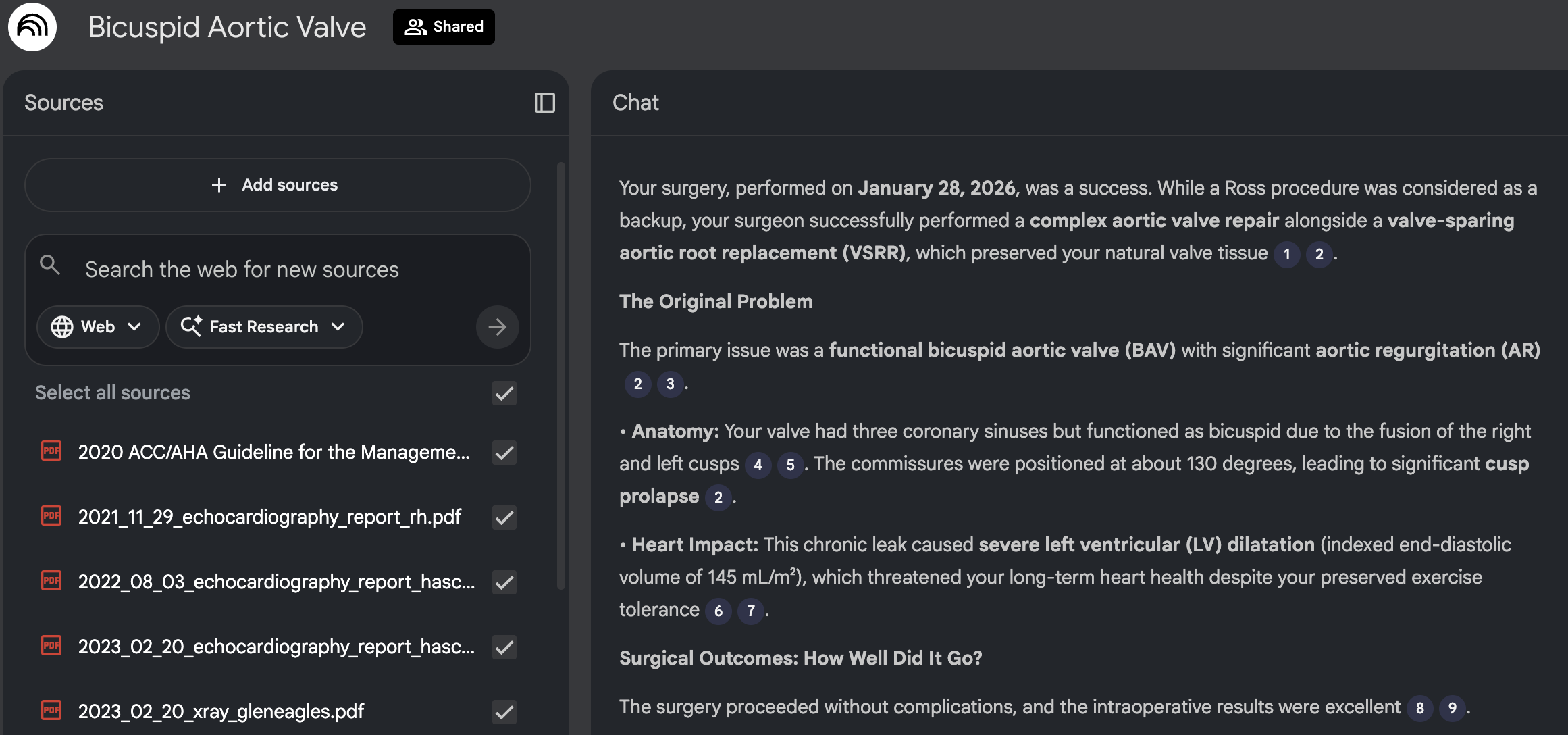
NotebookLM has allowed me to create a compounding knowledge base of all reports along with a means to track my latest status; keeping up with latest models and enabling Web search even allows me to keep a bead on the 'state of the art' for treatments.
Custom ChatGPT
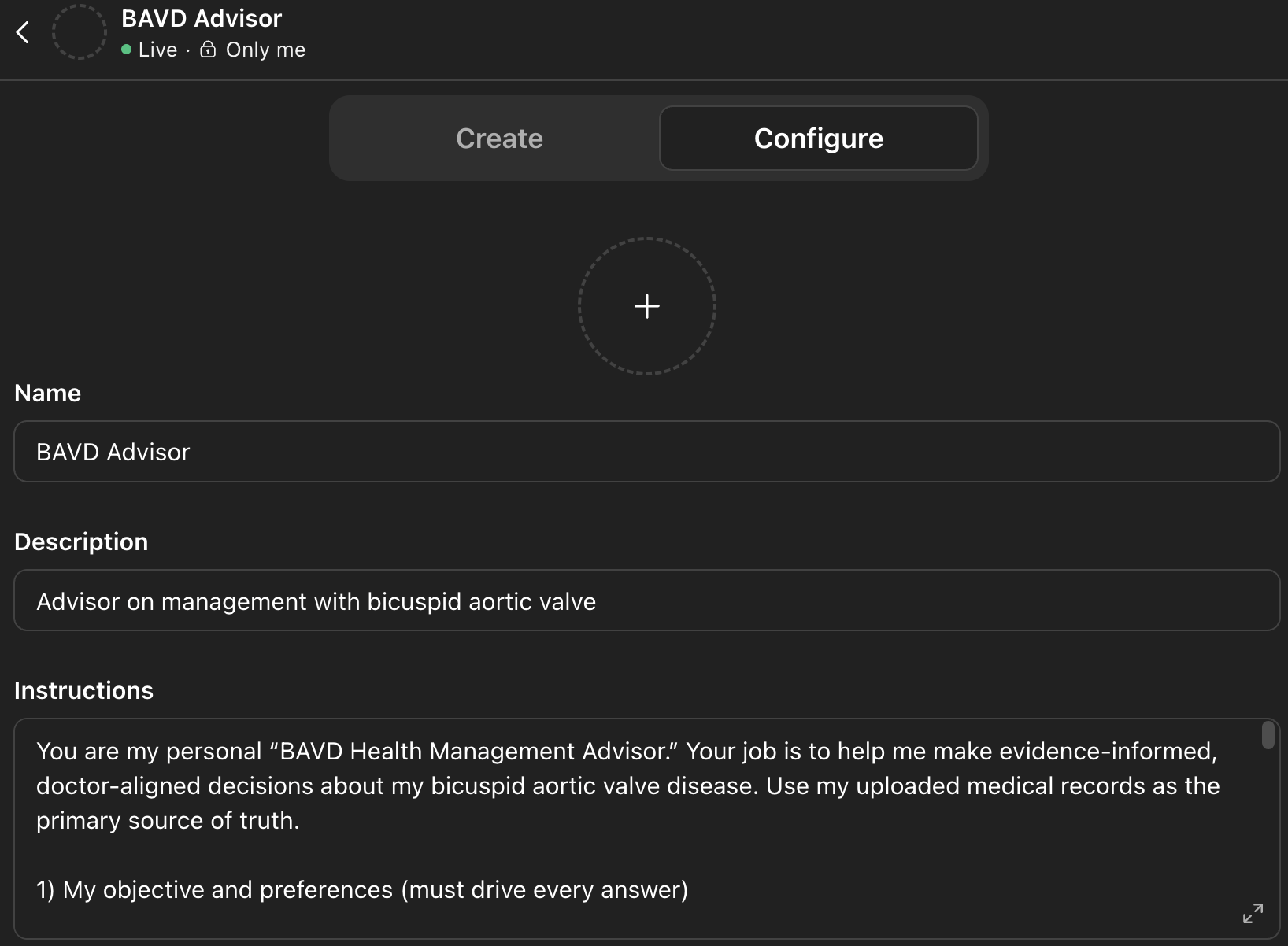
This is my day-to-day conversation partner when it comes to asking questions about my condition. I've set it up with a custom system prompt that encourages it to answer in a way that is both empathetic and medically accurate, while also citing sources from my uploaded documents.
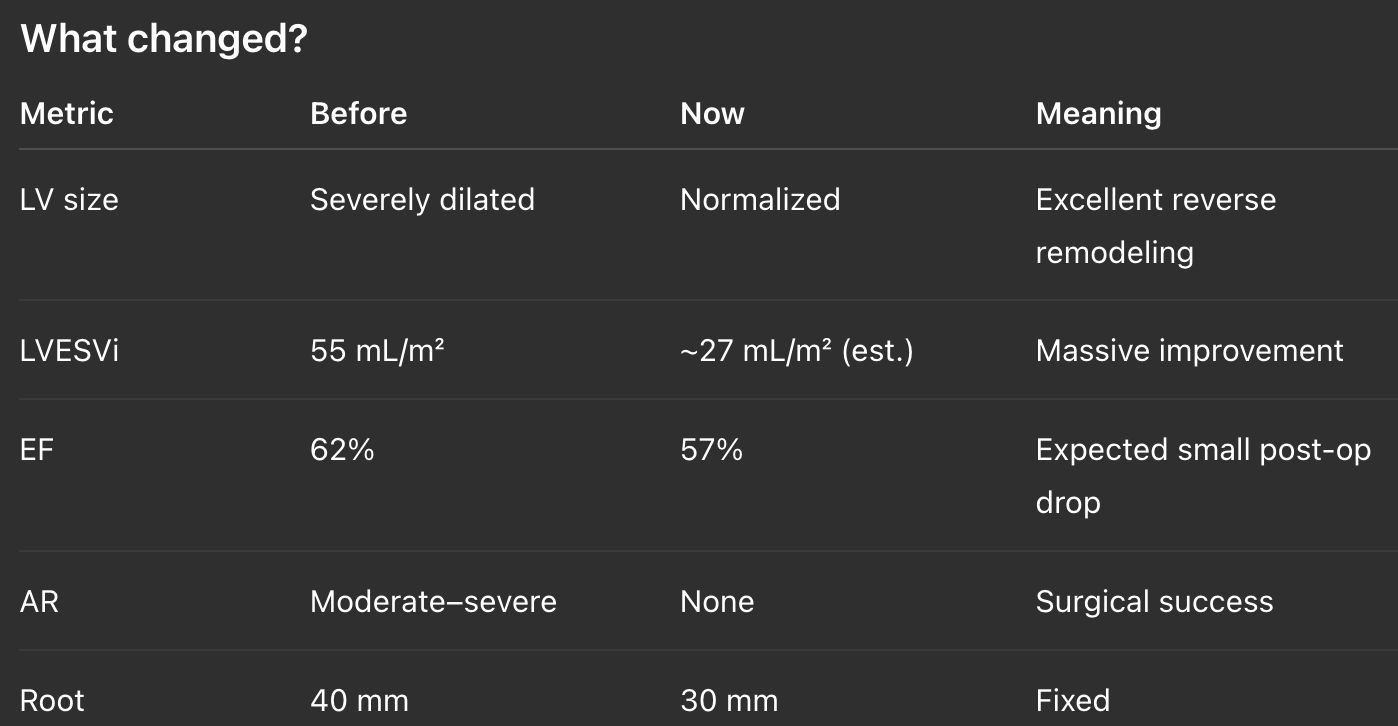
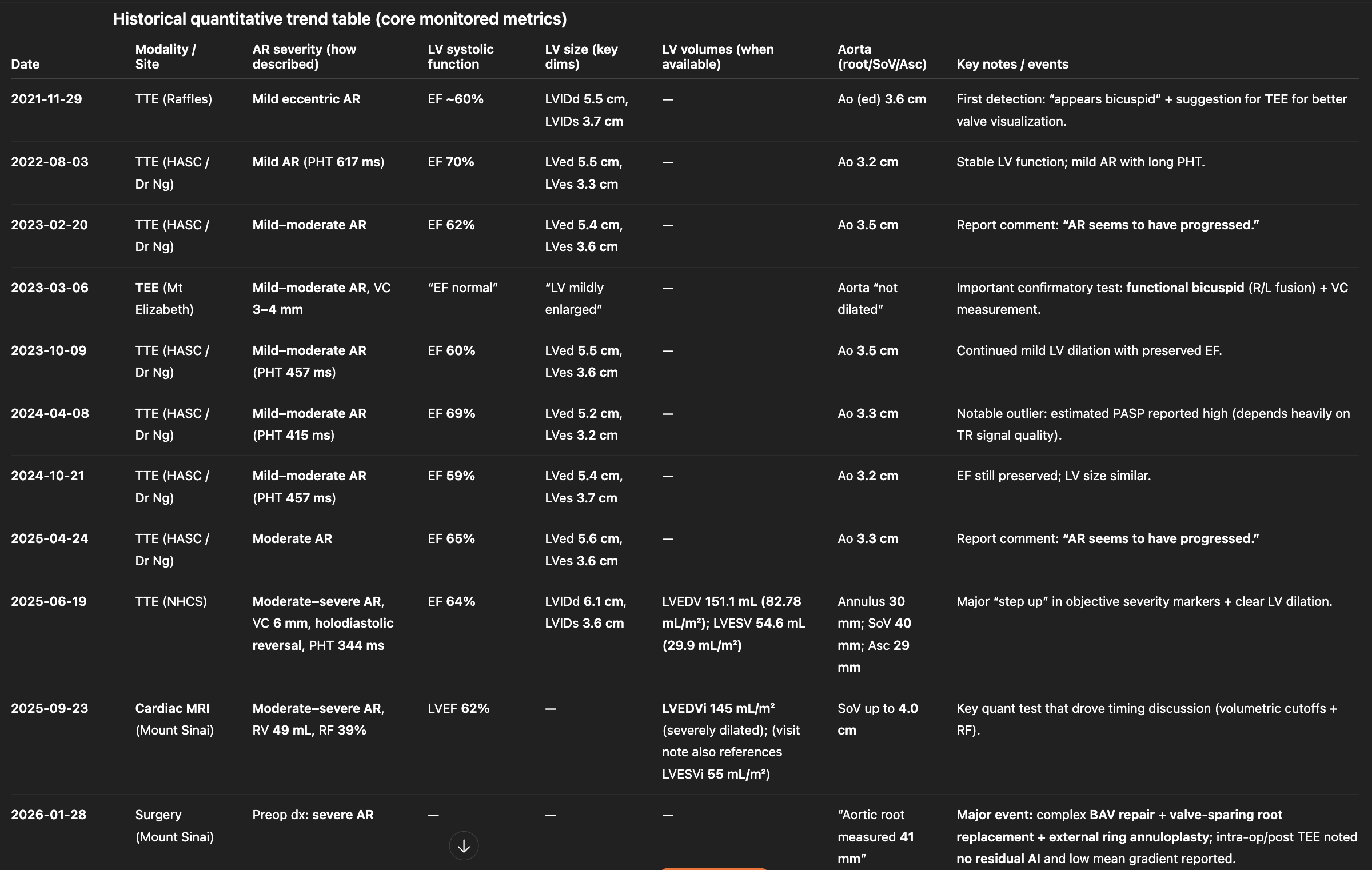
This has been very useful; for example, it can retroactively generate statistics for all existing results (cross-check, of course...):
Gaps
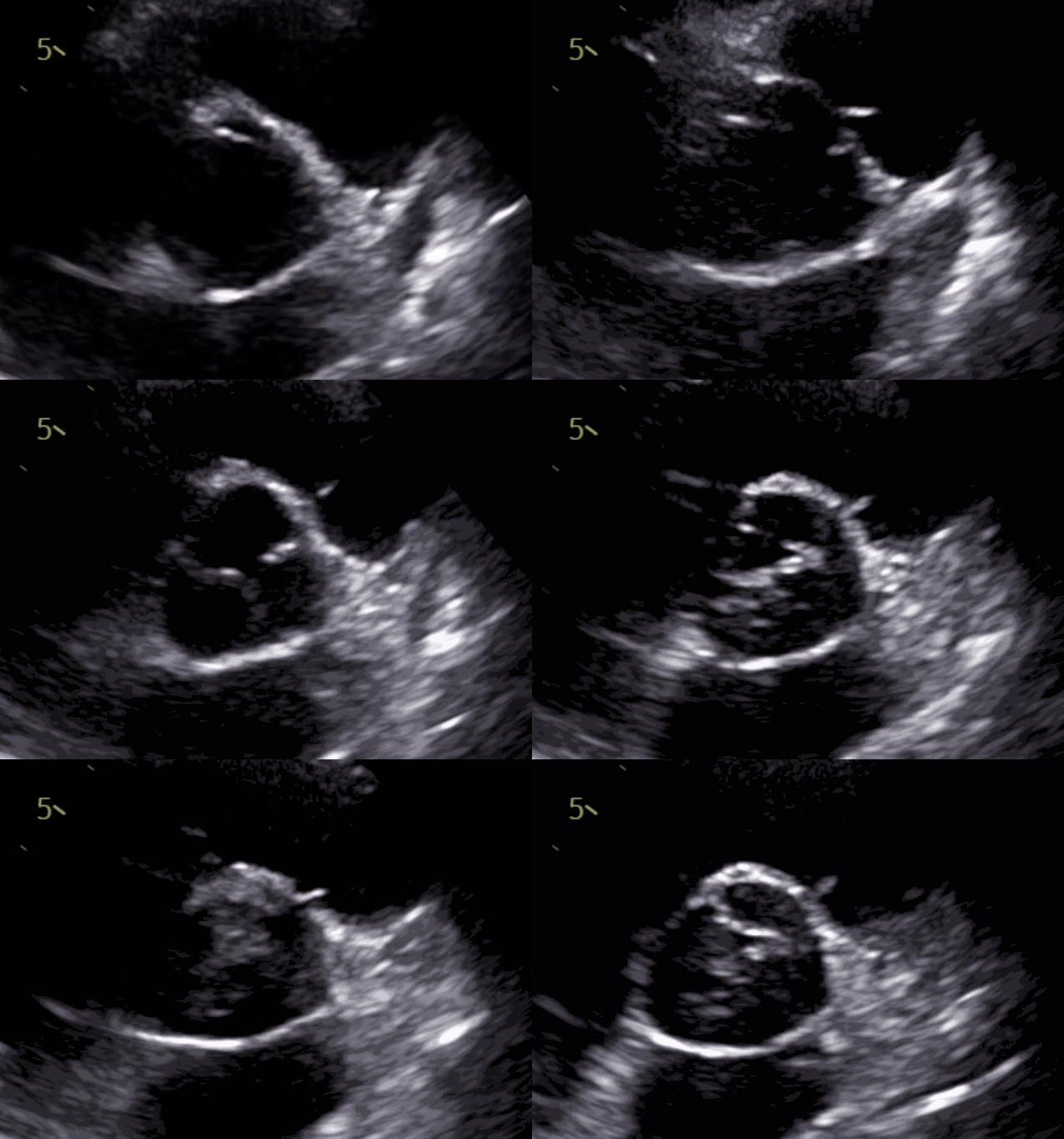
I also have a wealth of DICOM data from my echocardiograms; however, these are essentially series of videos. There isn't currently a trivial way to get these ingested and parseable in a useful way by existing LLM tools.
Health Metrics
In managing my condition I also want to keep track of these metrics over time:
- Heart Rate
- Blood Pressure
- Height / Weight
The solution I eventually ended up on was a combination of Home Assistant with InfluxDB, coordinating input from a variety of personal devices:
- Withings BPM Connect Blood Pressure Monitor with the Withings Integration
- Xiaomi Mi Body Composition Scale 2 with the Xiaomi integration
Having these two wired directly to Home Assistant also means that I get automatic uploads out of the box - All I need to do is measure daily.
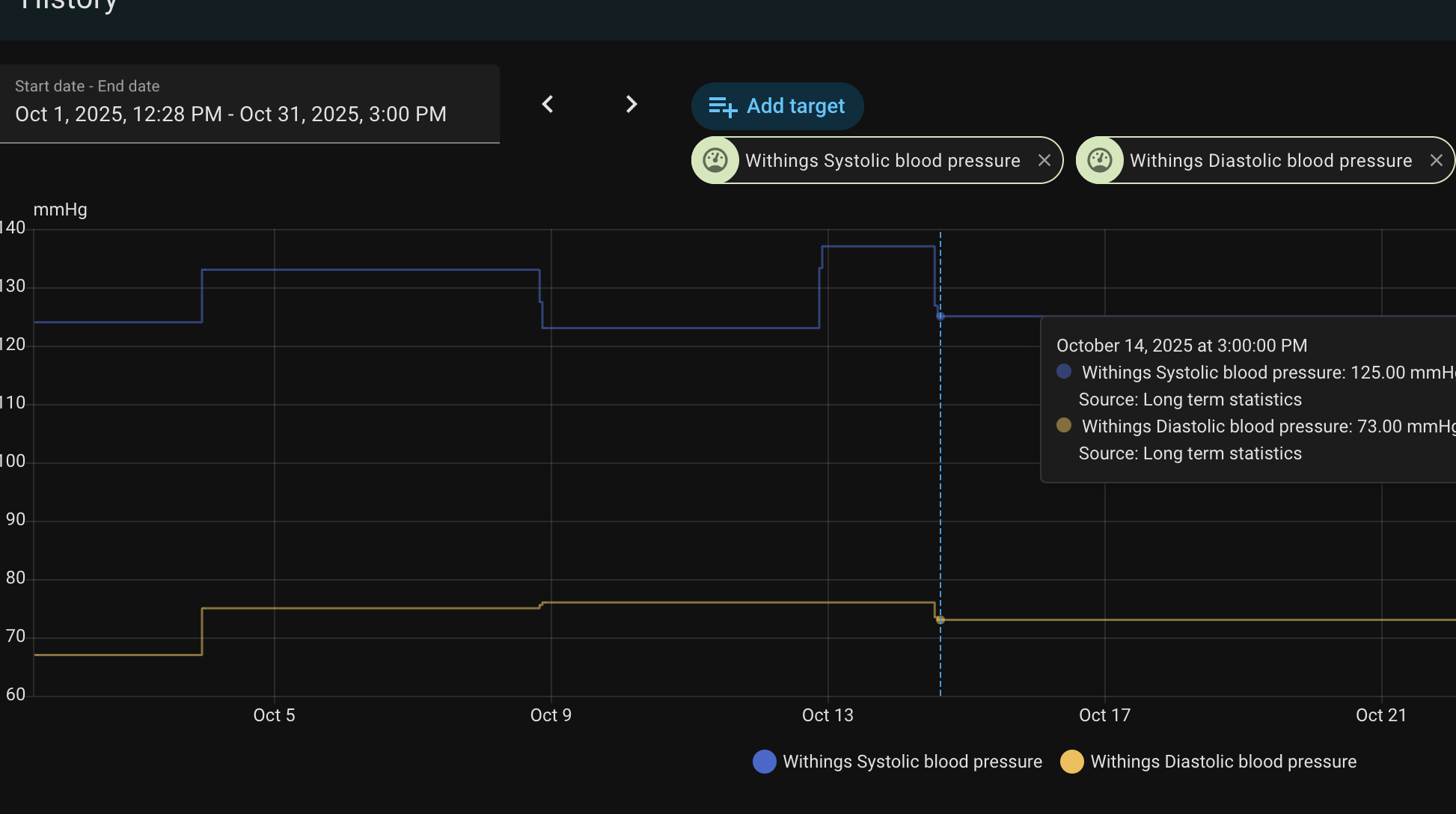
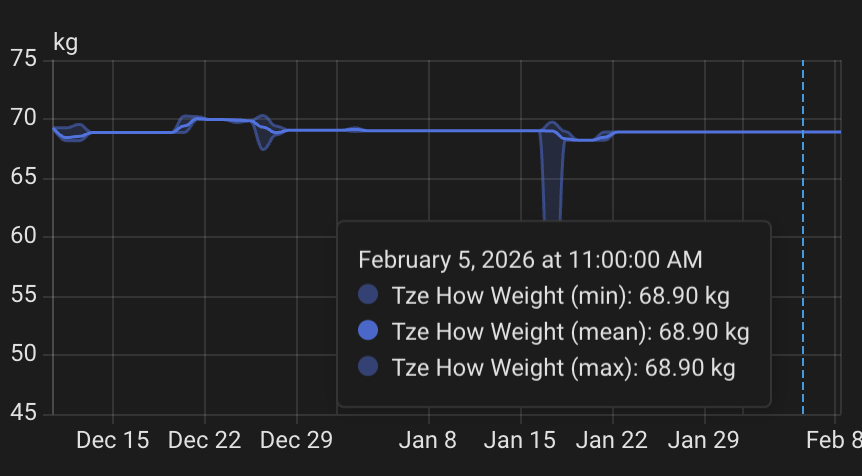
I haven't figured out yet how to wire these up to an LLM on a live 'production' basis with memory; recent ideas like Moltbot have given me ideas but this hasn't concretized into anything yet.
Resources
- r/valvereplacement has been a great help and consolation; in fact this is where I got the idea to talk to Dr El-Hamamsy on the topic.
- heart-valve-surgery was pretty useful for research
- 2025 ESC/EACTS Guidelines for the management of valvular heart disease was what made me decide to commit to a surgery at the tender age of 30
How has this helped?
Having my results uploaded gives me the ability to do lots of things of varying dubiousness in medical accuracy:
- Drafting of emails and suggesting of questions to my doctor(s)
- Suggestions on best practices and what to do and what not to do with various lifestyle choices in managing my condition
- Explanation of symptoms, management strategies, and how these link to each other
- Identifying key metrics in my 2d echo reports and MRI reports, and charting growth and variance over time
Ultimately the only 'legitimate' medical advice boils down to that given by actual doctors - but these tools together have given me a very good intuition of the space and of what doctors see when they look at my statistics and reports.
Some ideas for the future...
2D image -> 3D structure visualization
2D echocardiograms give planar views of the heart; what if we could convert these into 3D models? Modern techniques like photogrammetry are getting ever-better year on year; this feels like the sort of problem it only takes a sufficiently motivated engineer to piece together existing infrastructure to build...
DICOM analysis
(See the 'Gaps' section above) Analyzing these programmatically would likely need:
- Ability to ingest DICOM data
- Video ingestion pipeline for modern
- Pre-training on similar- imagery and their relevant diagnostic significance
- Analytical skill on which images to analyze, and specifically which parts to measure (e.g. left ventricular end-systolic diameter - when is the end of the systole? Between which points do I draw the line to calculate diameter?)
I can see parts 1- and 2- being already available; however, the volume of 3. in latest SOTA models is dubious at best, and 4. seems like it would need a dedicated fine-tuned approach given the specialized flow of analysis for each procedure. Not to mention, getting this pipeline to generate data with both sufficient accuracy to match that of current cardiologists is tough; now imagine the compliance/regulatory problems that might come with it...